Practice Routines
Building a Weekly Practice Rhythm
A simple weekly rhythm prevents practice from becoming one long random session.
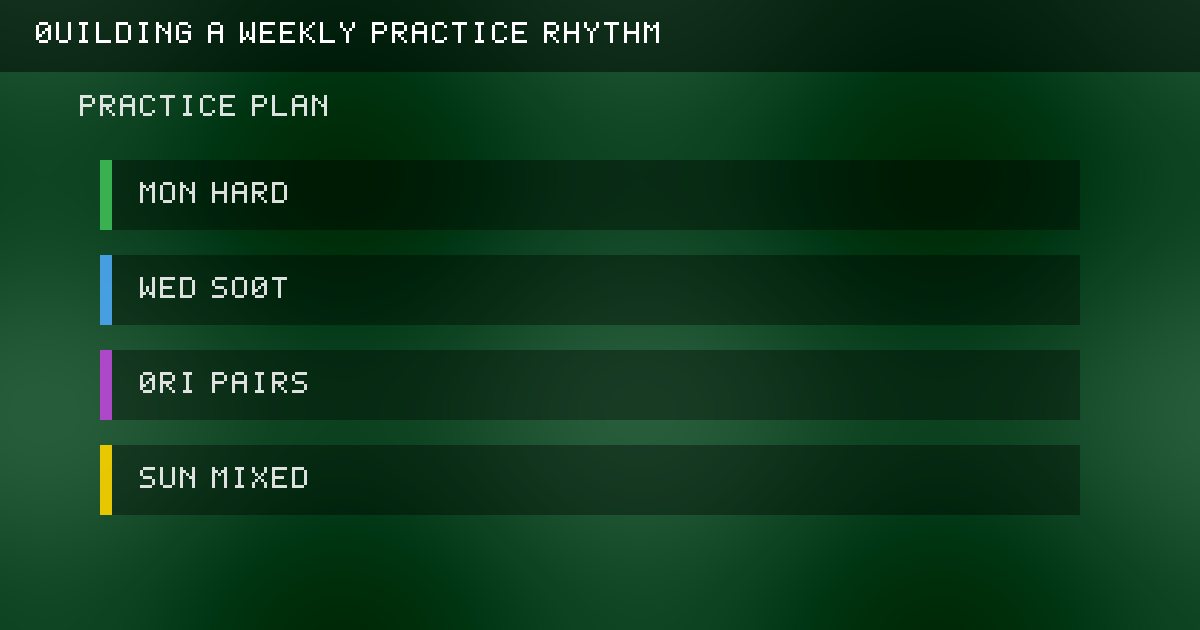
Start with one concrete hand
The useful way into building a weekly practice rhythm is not to begin with a slogan. Begin with a hand: hard totals Monday, soft hands Wednesday, pairs Friday. A hand like that has weight. You can put the cards on a table, point to the dealer upcard, and ask what the player is really being asked to decide. Once the hand is visible, the lesson stops floating around as theory.
The common instinct is to practice only the mode that feels easiest. That instinct is understandable, which is why the mistake survives. Blackjack decisions often feel wrong before they become familiar. The trainer is built around that awkward gap. It gives you the same kind of spot again and again until the shape of the hand matters more than the first emotional reaction.
What the trainer is really asking
In this article, the important idea is simple: rotate categories so every hand family gets attention. That does not mean the hand is pleasant. It means the action is better than the nearby alternatives when many similar hands are considered together. Basic strategy is full of these quiet comparisons. It is less about finding a beautiful answer and more about refusing the worse one.
That is why the dealer upcard matters so much. A player total by itself is only half a sentence. Hard 16 is not one thing. Ace-7 is not one thing. A pair of 9s is not one thing. The dealer card finishes the sentence. When the dealer is weak, some hands can wait. When the dealer is strong, weak hands usually have to improve. When the hand is a pair, the first question is whether two new hands are better than one current total.
A small drill
Use three focused days and one mixed review day; keep each session under fifteen minutes.
Keep the drill short. Ten or twenty decisions is enough if each one gets a real explanation. Before pressing a button, say the hand family out loud: hard total, soft hand, or pair. Then say whether the dealer upcard is weak, neutral, or strong. Only after those two labels should you choose hit, stand, double, or split. This slows practice down at first, but it makes the answers stick.
If you miss, do not just memorize the correction. Name the pattern. A missed hard total against a strong dealer card belongs to one family. A missed soft double belongs to another. A missed pair split belongs to another. The pattern is what helps on the next hand, because the next hand will almost never be exactly the same cards.
Where people drift
Most mistakes are not random. They come from a small number of habits: protecting a weak total because busting feels embarrassing, standing on a soft hand because the total looks high, splitting a pair because matching cards feel special, or treating the dealer's fixed rule as if it were a player strategy. Each habit has an emotional logic. Each one also has places where it fails.
The way out is to make the decision smaller. With hard totals Monday, soft hands Wednesday, pairs Friday, do not ask whether you like the hand. Ask what information you have. You know your total, whether an Ace is flexible, whether a pair exists, and what the dealer is showing. That is enough to find the basic-strategy family. The trainer's job is to make that family visible before the feeling takes over.
Keep it educational
The rhythm matters more than the exact day. What matters is returning before the patterns fade.
For this topic, educational practice means returning to hard totals Monday, soft hands Wednesday, pairs Friday and asking why the better answer is to rotate categories so every hand family gets attention. Blackjack Trainer is not a gambling product: there are no accounts, deposits, prizes, wagers, or operator recommendations here. The useful material is the game structure itself: arithmetic, probability, memory, and decision-making under incomplete information.
A good session on building a weekly practice rhythm should leave the next decision quieter. If the cards start to blur, stop and write down the hand family that caused trouble. The target is not excitement. The target is making one small piece of the chart feel obvious enough that you can explain it without rushing.
What to read next
After this, move sideways rather than randomly. If the article was about a hard total, read a dealer-upcard guide. If it was about soft hands, drill Ace hands. If it was about practice structure, use the ten-minute plan. Blackjack is easier when each page points to the next useful question.
Related Reading
10-Minute Blackjack Practice Plan
A short practice routine for hard totals, soft hands, pair splits, and review.
Why Basic Strategy Should Feel Boring
The goal of practice is not drama; it is making the right answer feel ordinary.
When to Stop a Practice Session
Short practice works because blackjack decisions get worse when fatigue turns patterns into guesses.